A memory of one incident I attended on bonfire night. It didn’t end well

Lying in bed tonight, 7th November 2015 listening to the fireworks going off for the third night in a row I can’t help but remember responding to one of the usual injured by a firework incidents that I seemed to attend every bonfire night, weekend, week… It seems to last longer every year.

I was the Duty Fire Investigation Officer for the West Midlands and was called to an incident in a yard in the Black Country, close to Wolverhampton. I had been finishing off the investigation into a house fire about a mile away when I was informed of this latest job.

I arrived at the scene to find a Fire Engine and a Police car parked outside a scrapyard/vehicle recovery yard/recycle centre. There was the remains of a bonfire which had been well and truly put out by the fire crew, and about 10m away a pile of discarded blood soaked bandages.

A Police Officer informed me that a Firework had hit the man in the head causing a horrific injury. The man had died at hospital

Examination of the fireworks that had been set off seemed to indicate that, although people had bee stood well within the 25 m safety range everything else was in place to use them safely. All of the big box 100+ fountains were angled away from the area the small crowd of the family and friends of the workers had been standing. There was no evidence of any firework carcasses anywhere in the yard, except a few empty tubes of Roman candles nailed onto timber frames.

Mooching around the yard, just beyond where the man had fallen I found a small piece of copper pipe. The pipe had body tissue and blood on the outside but also inside the tube. Recovering, bagging-and-tagging the pipe so as to enter it into evidence I returned to the soggy remains of the bonfire and started to drag it out. Using a drag hook to pull the debris into a manageable area to examine it. When I earlier mentioned the fire was extinguished and a soggy mess what I didn’t mention was it was about nine metres square and about a metre high.

As I started to drag it out I found the remains of a fridge from a caravan. The back of the fridge had the usual sealed pressurised refrigeration system. The compressor and condenser were still in place however part of the exchanger coil had ripped apart. The missing pice was a “perfect physical fit” for the blood covered one I had found close to where the man fell.

The fridge had been thrown on the fire. The heat had expanded the gases in the refrigeration system. Eventually the weak point gave way violently and a piece of the exchanger coil, the piece of copper tubing was shot with some velocity out of the bonfire. It speared the unfortunate man in the eye, passed through his Brain, excited his head via the back of the skull and fell to the ground. In front of his friends and family

Everybody was convinced he had been hit by a fire work. Yet in there own way everybody had made the ad-hoc display as safe as possible

Somebody just made the mistake of throwing a fridge on the fire

The Post Mortem and scientific tests on the traces of soft tissue on the remains of the pipe confirmed it was that which caused the fatal injury.

Be careful on these nights. Booze, fireworks-which are mini explosive devices, and fire are not a good mix.

Respect the emergency service people that are out there looking after you. When you need them. You really need them!!!!!

Why is publishing so geographical

Ramblings of a bookworm

From an early age I have been reading, in fact you would do well to catch me without a book in reach. For years it was paperbacks, often second hand, as I got a bit older I started to treat myself to hardbacks so as I could read my favourite authors as soon as they were published. Now it’s all about the download, I have dozens of books on my Kindle and a few on my iPad from the Apple Store.

It is this new download age that has got me asking questions.

As an avid reader I spend a lot of time browsing bookshelves, whether they are in indie bookshops, Supermarkets, or the big chains such as Waterstones. Why am I not finding print books on the shelves I know are available online?

At first I thought it might be a geographic thing. Some of the writers I’ve found online are from other country’s and maybe they haven’t found a market in the UK. Then I started finding really good UK authors I’d never heard of. Mari Hannah is a writer based in the northeast, she has written the best Police procedural thrillers I have ever read. Can I find her books on the shelves in the Midlands?Only in the biggest of the big bookshops, and only if I had already heard of her and knew where to look. There are more big displays for the latest John Grisham or Stephen King, in fact a recent trip to my local Waterstones found no UK writers books on their main display table.

So maybe it is a more localised geographical issue. Maybe you have to be a really local author to get into your local shops. No, there is another excellent writer Angela Marsons who is hot on Mari’s heels as, in my opinion, the top Police Procedural writer at the moment. She sets her books in my local town in the Black Country, she lives and works close to the same area, the only place I have ever seen her books are on Amazon. She even mentions one big supermarket in her books, they have a big book section, I look through it every Sunday when I go shopping. Have I ever seen one of her books in there? No.

So why are the bookshops not carrying these books. Is it because it’s easy to sell the big names?, or maybe the publishers are not out there pushing them enough. I know the writers are tireless in the promotion of their own books. There is hardly a week go by when they are not at a literary festival. Twitter is awash with them retweeting reviews, all online.

I write reviews on this blog. I’m lucky enough to get pre-published books to do early reviews, and yes it is online so people who read it use computers, tablets or smart phones to read it. But many people have not yet crossed over to e-readers. Recent figures have shown that the figures for ebooks are falling whilst the figures for actual books are back on the rise. I get dozens of people contacting me when I give a book a good review on, or after publishing day, asking me where they can get a copy because “they’ve looked everywhere and couldn’t find a copy”

I know the next generations first port of call for most shopping these days, especially books, is Amazon. They are missing out on touring around bookshops reading the backs and inside the cover. They are missing the adventure of popping into a shop to find something to read and losing a couple of hours of their lives as they get carried away browsing the shelves.

Don’t get me wrong I love Amazon, I like the way it gives me suggestions based on what I’ve previously purchased, but it’s not as good as the conversations I have with the people who work in bookshops. I know I have found some fantastic writers, who’ve given me some fantastic stories and characters, but I wonder how many other people have missed out by just not living in the right part of the country.

Killer-Lady-Writers

Things are changing, or is it just me?

Those of you who read my first blog will know a bit about my reading habits over the years, and about the types of book and the authors I read.

I honestly cannot think of a female writer whose books I read prior to J.K. Rowling’s Harry Potter series. This was not out of choice, they just didn’t write what I wanted to read.

Was it a coincidence that Rowling chose to present herself as a man in the guise of Robert Galbraith, was she trying to completely disguise herself or was she trying to break into, what I thought was a male dominated genre.

People will be saying that there have been women writing detective/ mystery/ police procedural books for years. Agatha Christie being a shinning example.

But over the last 2 or 3 years has anybody else noticed the emergence of some fantastic, British, female, Crime Thriller writers, and wow do they pack a punch.

In no particular order here are some of the women I have discovered in the last year or two.

Mari Hannah

Mari writes the Kate Daniels series. She is a DI in the North East and heads up a squad in the Major Investigations Team. Her stories are gritty; the descriptions of the characters and crime scenes are second to none. The violence in some of the scenes is breath taking and there is a no holds barred approach for the reader; but its not there as a gimmick, every act helps tell the story.

As with all good series there are back-stories to the characters that are always relevant to the main story, but also flow through the series linking them all, yet they are so well written each can be read as a stand alone

If you haven’t read any of these books yet you have missed a treat.

Mari Hannah can be found on Amazon or her own web site www.marihannah.com

Marnie Riches

Marnie is the author of a series of books, only two so far but more to come, in the George McKenzie series.

When The Girl That Wouldn’t Die was released reviewer’s started to compare it favourably with Stig Larson’s Millennium series. Well that is quite something to live up to so I downloaded it to read on my holiday. I wasn’t disappointed the book starts with a bang, in more ways than one. The main character, George McKenzie is a Cambridge exchange student living in the red light district of Amsterdam. Following what appears to be a terrorist explosion in the City she teams up with a local Police Inspector. The unlikely team unravel an amazing plot which twists and turns all the way to the end.

I was lucky enough to get a pre release copy of the second book in the series, The Girl Who Broke The Rules. It was one of the best sequels I have ever read. I find that some authors struggle with the second book, but just like Mari Hannah, Marnie Riches just got even better.

In these two books Marnie Riches tackles prostitution, drug use, and the human trafficking in a no holds barred manner.

I look forward to the next The Girl Who……..book and hope this turns into a long series.

Marnie Riches can be found on Amazon and also on her own web site www.marnieriches.com

Angela Marsons

Angela Marsons has written 2 books so far in the Detective Inspector Kim Stone series.

These books are set close to home; in fact they are set exactly where I live and the surrounding area. The Police Station Kim Stone works from; Halesowen in the West Midlands is my local station. So if ever I was going to notice any flamboyant exaggerations, unrealistic events or characters it was gong to be in these books. I didn’t.

Angela depicts the places and the people of the Black Country perfectly. The crimes she uses in the stories are all too realistic, and unfortunately common. The first book Silent Scream revolves around Child abuse at a Local Authority Children’s Home. The second book Silent Scream deals with the phycology of victims and how their vulnerability can be manipulated.

Angela also uses her characters back stories to enhance the main story and in the second book manages to introduce a nemesis to throw against DI Stone that shows a vulnerability, in the Police Office, that many writers attempt but few manage to convey.

Angela Marsons can be found on Amazon and at her own web site www.angelamarsons-book.com

I have singled out 3 women here because they have written my favourite books over the last 2 years but there are others who have also written brilliantly.

I find myself reading more books written by British women now than by any others.

I think of these Killer-Lady-Writers as a new breed of writer. They manage to combine the personal side of a character with the devastation they encounter better than the men used to.

Or is it todays society, do we as readers need more blood and guts to keep us engaged, and is it just coincidence that there are a lot of female writers coming through at the moment.

Carry on ladies.

The Next to Die Neil White

Next To Die     Neil White

I have seen Neil Whites books on bookshelves for a few years now and can’t believe I’ve only just got around to reading one.

The Next To Die is set in Manchester and uses the diversity of the city to its full.

The two central characters in the book are two brothers: Joe Parker a defence lawyer, and Sam Parker a Detective Constable in the Greater Manchester Police.

I’m not giving much away when I say that the brothers have chosen their career paths, for different reasons, following the murder of their sister. They could not be more different in their life; Sam is married with a family, where as Joe is single. Both of them have back-stories, which begin to be told during the book, and it looks like both will make good characters for future books.

Neil White has written a great thriller around these characters. Joe is called to represent a man accused of killing his wife and daughter, but there are no bodies.

Sam is seconded from the Fraud team to work with the Major Investigation Team on the same case.

This inevitably leads to conflict between the brothers which at times tested my moralistic streak; I couldn’t quite decide which brother was right.

As the case continues there is no relaxing for the reader. Unlike some current authors there is no guarantee of the safety of a character. There are some vicious twists and turns in this book, all the way to the last chapter.

If you are looking for a realistic gritty crime book this is for you.

Who would I compare White to. I don’t know but if you are a fan of British Crime Fiction at its best and read people like Mari Hannah, C.L Taylor, and A.D Garrett you will love it.

There are 2 more books based around the same characters The Death Collector and The Domino Killer. I have already started The Death Collector and it is no disappointment so far ………….

Look out for more blogs about this Author. I’m Hooked

Silent Scream & Evil Games Angela Marsons

51vHlbqXJWL._BO2,204,203,200_PIsitb-sticker-v3-big,TopRight,0,-55_SX324_SY324_PIkin4,BottomRight,1,22_AA346_SH20_OU02_ 510HR4HwbRL._AA160_

Silent Scream & Evil Games     Angela Marsons

Two books one blog. There’s a reason for that. I read the last page of Silent Scream and immediately opened the first page of Evil Games.

I don’t like giving plots away so I’m not going to talk too much about the story line of each of these, I’ll just talk about the writing and main character.

I enjoyed these books more than most others I’ve read over the last few years. Angela Marsons has created a brilliantly complex character in Detective Inspector Kim Stone and hopefully we’ll have a few more outings with her and her team in the future.

Silent Scream introduces DI Stone in a tale centred on child abuse at a Local Authority Home. Are current day murders linked with abuse at the home? In todays society we are becoming more aware of these abuse cases and it makes the book relevant and up to date.

Stones own history mirrors that of the children who stayed at the home, and her back-story is slowly revealed as the book moves on.

The conclusion of the book is not as easy to predict as some stories of the same genre, and with twists and turn to the very end this book is a great read.

Evil Games follows on, but can be read separately, from Evil Games.

In this book Stone identifies the link between several serious crimes, including a murder. More of Stones back-story is revealed and the reader is given a greater insight into her psyche.

Along the way Stone comes into contact with her nemesis and an intellectual and psychological battle takes place that kept me enthralled right to the end of the book.

Twists and turns throughout show that Angela Marsons has a knack for complex plots without resorting to fanciful and unbelievable stories.

Angela Marsons has set these books close to where I live. Her descriptions of the places and people are perfect. It is a testament to her that at one time in the Evil Games I shouted out loud that she had something wrong, only to realise she was inventing a shop in which a suspect child abuser was working, maybe it is best to use a fictional premises in that case.

Further testament to her research skills is found in the derelict children’s home she uses in Silent Scream. It used to exist, it had a bad reputation amongst the locals, and it had a fire. I know this because I investigated it when I was still in the Fire Service.

I have a feeling that, like many other authors, Angela Marsons is only published locally.

One of the great things about e-books and companies like Amazon is it has allowed me to read books by people I would never have had access to by simply walking into my local shop.

So wherever you are in the world, get a copy of these books. Sit back and enjoy

The Girl Who Wouldn’t Die Marnie Riches

IMG_1046

I read this book in 2 days on a recent holiday. It’s good, really good.

Much of the story is based in present day Amsterdam and its eclectic residents.

From the very beginning the setting is perfect allowing Marine Riches to introduce us to an amazing bunch of characters which may have been a little unbelievable anywhere else.

The main character, a Cambridge exchange student, George McKenzie lives above a weed selling coffee shop and counts window sitting whores amongst her friends and neighbours. Her college friends are a strange mix of races and creeds. All of this brings richness to the plot which keeps the pages turning from beginning to end.

The story starts with an explosion at the University and a chance meeting between George and a middle aged Police Investigator, Paul van den Bergen. What can a small mixed race young woman from England and a Middle aged Dutch cop have in common. Not a lot at first but a relationship and trust starts to build as more incidents occur. Whilst van den Bergen carries out the official investigation George becomes more embroiled in her own helped by her closest friend and fellow student Ad.

The story includes more murders as the case expands, and I have to say Riches has found some new, and realistic, ways of murdering people. But are the incidents connected and if so how. Could they be related to the parts of the story that take place 5 years prior in London. Don’t try and second-guess the writer there are twists and turns all the way to the end.

I loved this book.

It has been compared to Stieg Larsson’s Millennium Trilogy in some reviews and I have to agree.

I know there is a second book that will be released in August “The Girl That Broke The Rules” I can only hope that this is the second of many.

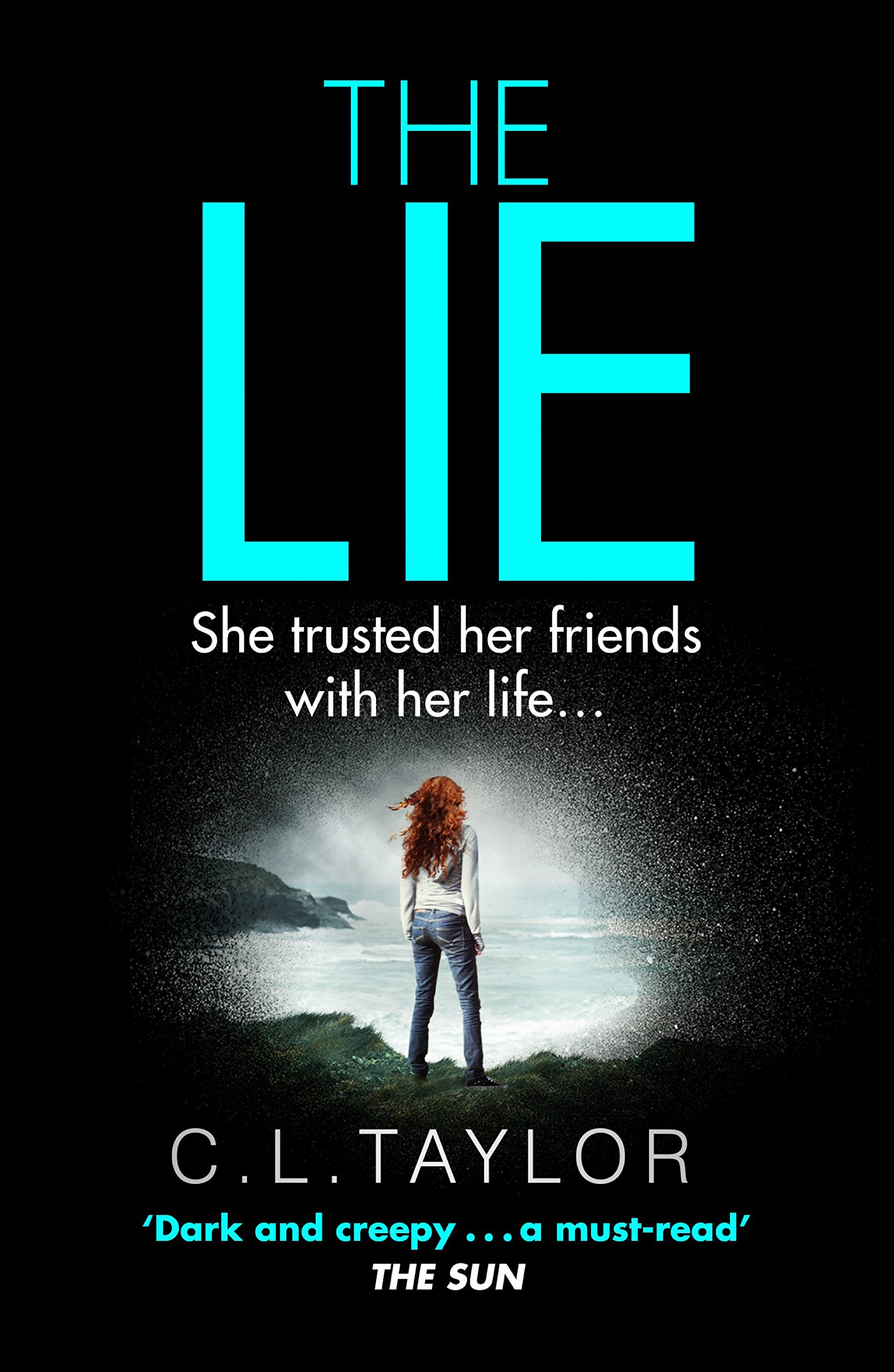
The Lie C.L. Taylor

THE-LIE-by-C.L.-Taylor

The Lie       C.L. Taylor

A few days ago I saw a picture of a newspaper article about The Lie. The person who posted the picture on Twitter is an author I read and admire so I looked the book up, not my usual read but it got my interest. WOW am I glad I read it.

The story is set in rural Wales in the present day, with flashbacks to a period five years ago.

The lead character Jane Hughes is working in an animal rescue centre when her past begins to catch up with her.

Five years ago she had been on a holiday with three friends to a Himalayan retreat where things had gone terribly wrong. The ramifications of the incident start to play out in the present.

The book looks at the demographics of a group of women who met at University. It openly looks at the friendship, bitchiness, swings in friendship and the destructive effects it has on the group. Its honest, it will make you think about same sex groups of friends and how the relationships alter over time.

Everybody knows such a group. The usual traits are there: “I’m your friend because she, is not because I like you”. “I will make her like me more than she likes you”. Twist this in with one, or more, of the friends being psychotic and you have a volatile mixture.

The friends take a holiday to what they think is a Retreat but turns out to be a fledgling cult.

What happens at the retreat will have to be read because I’m not going to spoil it.

To say this book is a physiological thriller is an understatement.

During the flashbacks to the time the women spend in the retreat the author handles the physical and mental abuse, along with the attempts to indoctrinate the girls into the cult, with a skill that will keep you turning the pages but also make you scared to see what comes next.

Who would I recommend this book to? Everybody.

It’s one of those books that will be enjoyed by men and women.

I’m going on holiday in a few weeks time and I wish I’d saved it till the flight. This would have made ten hours in the air pass in the blink of an eye.

Looks like I’ll just have to put The Accident on my Kindle and hope it’s as good.

56 The Story of the Bradford Fire Martin Fletcher

56 The Story of the Bradford Fire

Martin Fletcher

bradford fire

Those of you that know a bit about me will know that I have more than a passing knowledge of fires and fire investigation, so when you read this blog you will know that it also comes with a healthy degree of expertise and knowledge.

I picked the book up last week and had read it within 48 hours, then I read it again over 3 or 4 days, just to make sure I hadn’t misread anything. This is without doubt one of the best accounts of a fire, as seen from a victims point of view, and as a piece of investigative writing,  I have ever read. Martin Fletcher if ever we meet let me buy you a coffee.

The first half of the book is autobiographical. Martin writes about his life leading up to the incident in 1985, his experiences at the fire, and his life after the fire. He reminisces about the family members he lost on the day, about decisions and actions he took on the day which ultimately led to his survival, and the grieving process he is still going through. Later in the book he mentions, fleetingly, that he suffers from PTSD but at no time in the book does he come across as self- pitying, or that he is looking for anybody’s empathy.  The second half of the book looks at his need to find out all of the facts about the fire. His mother was never happy with the outcome of the investigations surrounding the fire and subsequent Inquiry Chaired by Mr Justice Popplewell. Fletcher was too young at the time of the fire to realise what she was saying. As he grew older he began to understand her concerns. He heard story’s, and remembered remarks his father had made, about other fires in buildings belonging to the same man who owned Valley Parade at the time of the fire. He started to question the evidence given at the Inquiry when he noticed inconsistencies in the statements given by many of the people involved with the football club, the police on duty that day, and the expert fire investigators. He took months of his life to sit in research libraries to search out facts, and improve his understanding.

I have read in some newspapers that he is being berated for his campaign to have a new inquiry. I don’t see that. There is no malicious vendetta, there is no over exaggeration, there are no trumped up facts. It is a simple account laid out for all to see. Fletcher has taken facts and presented them in such a way that it should make it moralistically impossible for this incident not to be looked at again.

The book is written by a well-informed layman allowing anybody with an interest in this particular incident to read and understand the facts.  It is the remarkable story of a survivor of the incident and his troubled journey through his teens and young adulthood. It is the account of a man who is looking for answers, and to some extent finds them, but I don’t think it’s the end of his story just the first instalment.

I spent 30 years in the Fire Service, the final 12 as a specialist Fire Investigator. In 1985 fire investigation in this country was in its infancy. Some would say at that time most fire investigators were not much more than dust kickers. As a discipline and science, like all areas of forensic investigations, it has come on leaps and bounds. However there is a lot in this book that troubles me about the science, or lack of it, used in the testing of the investigators hypothesis as to the source of the ignition.

The book also raises concerns about the speed of the Inquiry, the fact that it commenced a few weeks after the fire and lasted for only a few days; where as other Inquiry’s into similar incidents, which happened pre and post the Bradford Fire, have taken years to come to fruition and months to be heard.  The fact that the Inquiry also embraced the investigation into another incident which happened on the same day, a riot in which a young boy died at Birmingham City Football Club, makes it seem more frivolous.

These days I lecture to students and professionals about fire investigation. I will recommend this book as essential reading and use it to set a project. That project will be entitled “How would you conduct this investigation if this incident happened today”. If the answer reflects the investigation which actually took place the student will fail.

As a little aside to this blog, and to explain why the Bradford Fire has always stuck in my memory let me tell you about what I was doing on the 11th of May 1985.

I was a fireman at Highgate Fire Station in the West Midlands. I can’t remember much about the morning; it would have been taken up by training and attending incidents like any other Saturday day shift.  At about 2.30 in the afternoon both of our appliances were mobilised to St Andrews, the home of Birmingham City Football Club, to a flare ignited in the stand. When we arrived we were met by Police Officers who told us there was a highly charged atmosphere in the ground and that the home fans had been fighting running battles, both inside and outside of the ground with the away team, Leeds United, fans. The officer asked us not to enter the ground as it might be inflammatory to the situation so our gaffer went in on his own to ensure there was no sign of a fire. He returned to the appliances and we drove back to the station.

Highgate Fire Station sits on top of a hill and from the mess room you could see St Andrews. Once the appliances were parked up back in the engine house we made our way up the stairs to the mess for a cup of tea. As we walked through the door the first thing we saw was the live pictures from Valley Parade showing the stand fully alight and people trying to escape. Everybody ran to the window to look at the Blues ground all of us thinking “what the hell did we leave behind”. Fortunately for us the fire was in another football ground.

As we sat transfixed by the images on the television we received another shout, “the bells went down” We were on our way back to St Andrews where a wall had collapsed during a riot that was taking place in and around the ground. This time when we arrived we had work to do, digging people out from under the rubble whilst the police tried to protect us from the missiles being hurled at us by so called football fans. This was the incident in which the young boy died and which made up the second half of the Popplewell Inquiry :-

I personally don’t  think much of that half either!!!

The Inspector Pekkala novels by Sam Eastland

The Inspector Pekkala novels by Sam Eastland

Three of my favourite genres of books are, War, Police, and Espionage novels. When I found the first Inspector Pekkala novel, Eye of the Red Tsar, I knew that I had found a gem amongst stories.

Eastland takes real events and weaves an excellent yarn around them. Inspector Pekkala was once the favourite detective of the final Tsar of Russia. Equally feared and respected across the country he built a solid reputation and gained the trust of the royal family. Following their murders he his hunted down by the communists and sent to a gulag deep in the heart of Siberia where he is given a job no man is expected to survive. Living in the vast forests he is left to fend for himself and develops a mythological status amongst the other prisoners.

Stalin himself sends an officer to release Pekkala from the prison with a guarantee of freedom if he can identify the real killers of the Tsar and his family. The book brings to life the terrible conditions within Russia at the time of Stalin’s reign. Pekkala is a wonderful character with a unique set of personality traits. He is thrown together with the man who was sent to release him, Kirov, a man who becomes his side-kick and forms an unusual friendship with the inspector, which develops during the series.

The second book The Red Coffin is set immediately prior to the outbreak of the Second World War. Pekkala, now established as Stalin’s main investigator, is sent to investigate the death of the designer of the T34 tank. The designer was killed before the tank was completed; several prototypes had been made and were in the process of being tested at the time of his death. One of the prototypes is stolen and is used by a group of anti-communist Russians in an attempt to provoke German forces to invade Russia with the hope of rousting the communist party. Pekkala and Kirov are sent to the T34 test grounds to investigate the death of the designer and locate the missing tank. This is not only a great story but also describes the tensions between Russia and Germany at the end of the 1930’s. The two main characters develop in this book making them one of modern fictions great crime teams.

In real life the T34s designer was killed by pneumonia as he attempted to drive a prototype over a 1000 miles in a demonstration of its capabilities. This story cleverly uses some of the known facts whilst staying completely within fiction.

Book 3, Siberian Red, is set at the outbreak of the war. Stalin learns of a man who is offering information on the whereabouts of the lost treasures of the Tsars. The man with the information is a convict in the same Siberian gulag that Pekkala was a prisoner in. Before he can be questioned he is murdered and Pekkala is sent to investigate the crime and try to find the location of the treasures. In what is like a living nightmare Pekkala is forced to leave Kirov behind and return to the gulag, undercover, as a prisoner. This book builds on Stalin’s greed and insecurity. He wants the treasure but he is also afraid of the White Russians, soldiers who were loyal to the Tsar, and have since formed a group in prison, and amongst the battalions of Stalin’s army. Back in the gulag Pekkala fights for his life whilst trying to gain information of the killer of the informant, and find a location for the Tsars treasure.

In the fourth book, The Red Moth, Pekkala is summonsed by Stalin following the finding of a picture. The picture was found in the bag of a single passenger of a German Scout plane. Stalin believes there must be more importance to the picture than anybody understands and Pekkala quickly confirms his thoughts. The picture contains information on some of the lost treasures of the Tsars. It also alludes to the fact that the Germans have located and were going to ransack the Amber Room, a room that was panelled in ornate Amber in one of the Tsar palaces, and take it to Germany. Pekkala is dispatched to locate the room and bring the panels back to Moscow before the advancing German troops can carry out their orders. The book has a great story and includes a moral dilemma for Pekkala, if he cannot recover the Amber should he destroy one of the great works of art to stop it falling into German hands. At the end of this book the outcome is revealed but at what cost.

Again this story revolves around real events. The actual Amber Room was located in Catherine Palace, near St Petersburg. It was overrun by German military units during the war and the contents were looted. The panels of the Amber Room have never been found, and to this day remain one of the great mysteries of the war, and one of the world’s great lost treasures.

Book 5, The Beast In The Red Forest, starts about 18 months after the end of book 4. Pekkala has been missing, presumed dead, since his attempt to locate the Amber Room panels. Stalin receives word that he may be alive and dispatches Kirov to the front line to locate him. Set against the ever changing back drop of the war between the Russian Army, the German Army, and the Partisan Army this story is more about espionage than the previous books.

Is Pekkala alive, will Kirov find him, and if he is alive why has he been anonymous for so long. All these questions are answered against a backdrop of close war, where front lines move backwards and forwards less than 100 yards a day, and in the background is a hidden plot that is only revealed in the last 50 or so pages.

Throughout this series Eastland examines life in Russia under Stalin’s reign. He uses Stalin’s flawed, psychotic personality, to bring a depth of threat not only to the main characters but shows what a threat he was to the world.

Pekkala is a wonderfully deep character. Life as the Inspector for the Tsar gaves him the investigative skills. Life in the gulag gave him survival skills. Life as Stalin’s Inspector gives him dilemmas which we may, or may not, agree with how he deals with, but one thing is for sure. I cannot wait for the next book.

I have used the UK titles for the books in this blog. If you want to find the alternative titles or read more there is a great website dedicated to these books www.inspectorpekkala.com

Believe No One A.D. Garrett

A short blog this time but about another brilliant book by the writing partnership A D Garrett.

Believe No One is a great story with DCI Kate Simms and Professor Nick Fennimore at the centre of  a crime which strikes a startling resemblance to the disappearance of Fennimore’s wife and daughter some years earlier.

The story starts some months after the end of Everybody Lies, and although this book could be read as a stand-alone novel, I would suggest reading the prequel first.

Simms is seconded to a multi-agency task force in America looking at the different methods of investigation used in the USA and the UK. The team are looking at cold cases when they come across a link between several Murders, a link which has been missed because of the territorial issues faced by American law enforcement agencies.  The more the cases are examined the more similarities are found with the disappearance of Fennimore’s family; but is it all coincidence?

Meanwhile another Police Deputy in the States recognises the similarities between a case she is currently investigating and one she had dealt with in a neighbouring County. She contacts Fennimore for help and he heads for America. It is not long before the different investigation teams get together and start to piece together the activities of a serial killer.

The narration of the book follows the main 2 characters but the introduction of a third main character, a young boy who becomes a victim of the killer, gives the story an extra dimension.

This book is a good read. Again the writing partnership of an established author with a Forensic practitioner has produced a realistic and believable story.

At first I was concerned about the ongoing background story of Fennimore’s investigations into the disappearance of his family, in a story which has yet to be told, but now it has me as hooked as one of those cliff hanger season finales on TV dramas.

I hope the next book in the series is out soon. I can’t wait to read it.