
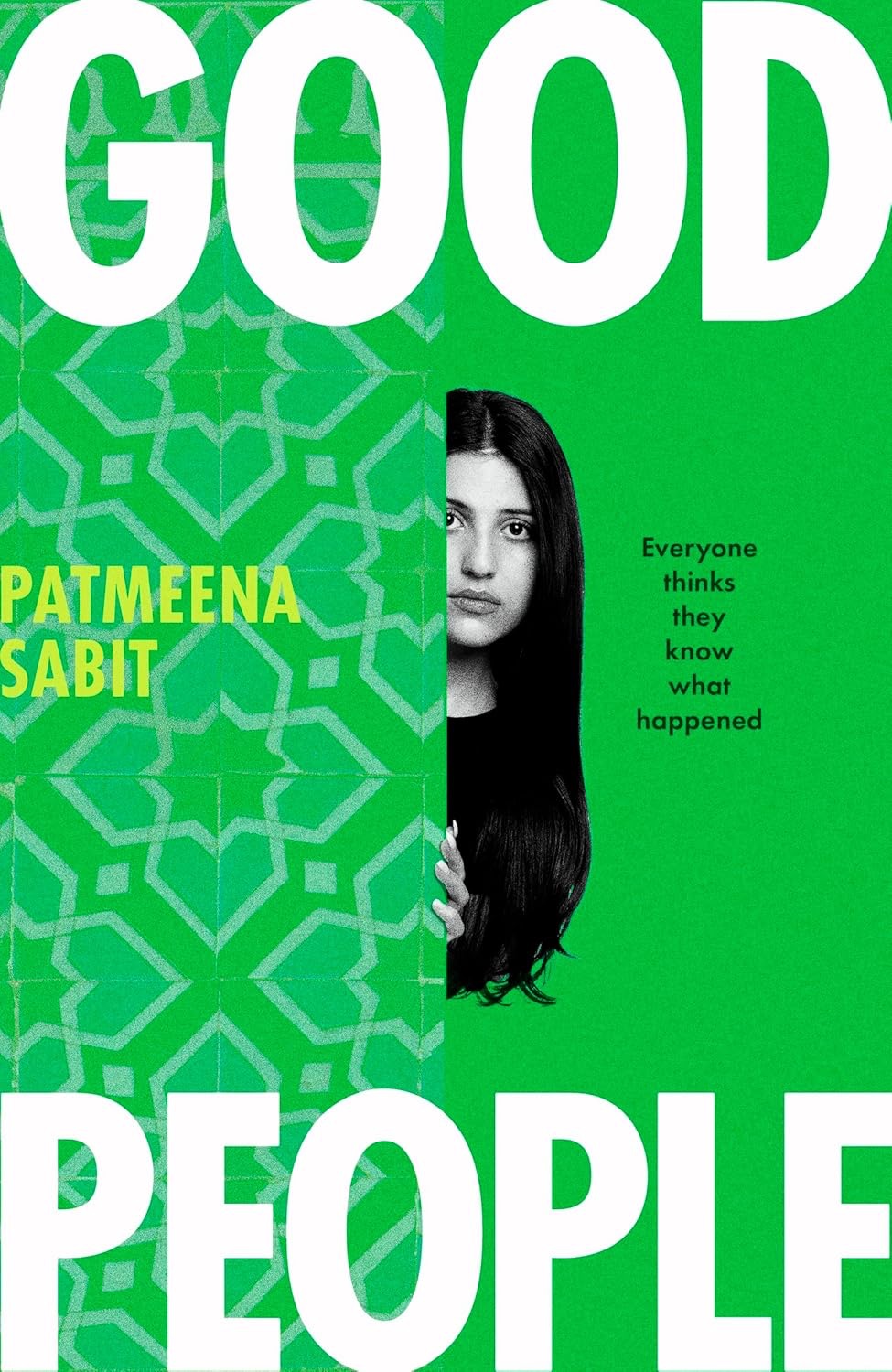
I think a better title for this book would have been Perspectives
Ultimately that is what this book is all about.
The story unfolds in a series of statements from numerous people who have known the Sharaf Family, or have been part of the investigation into a crime that centres around the family.
There is no narrative to string the statements together, the whole book is a story told through observations, thoughts, and hypotheses of the general community, an investigative journalist, and various professionals such as teachers, and attorneys. All looking back, with hindsight, into events leading up to…….I can’t really say without including a book spoiling, spoiler.
The “occurrence” doesn’t happen until about halfway through the book. But even then not everything is as it first appears.
So what can I tell you without spoiling the book.
The story centres around an Afghan family who escaped the violence of their country by moving to America
The father arrives in America with nothing but ambition and eventually works his way up to becoming a very successful business owner.
His family, two elder children, a son and a daughter, and two younger children are not just the apple of his eye, but also his status symbol of what he wants to achieve.
He tries everything to get them into the best schools and colleges, no matter what their ability.
In the Afghan community he is seen to be a normal parent with high ambitions for his children, outside of that community he is seen to be a pushy parent.
The eldest daughter Zorah is the fulcrum for the different opinions. To her friends she is the girl trying her hardest to live a normal life as an American teenage girl.
To the Afghan community she is a wild child that her father should reign in.
As the story continues people on both sides of that argument seem to change their perspectives on Zorah.
She is the catalyst for the events at the centre of the story.
Her “rebellion” against the aspirations her father has for her.
Her bucking of the traditions of the Afghan community.
Her families reactions
The opinion of her friends.
The opinion of the Afghan community, many of whom have never met her.
Opinions turn to reactions, as the chronological accounts reach the event the book centres around.
Throughout the book I was waiting for a narrator, somebody to stitch all of the personal accounts together. But the lack of the narrative is what held me, and kept me reading.
As far as books go this is as close as I’ve ever read to a voyeuristic experience.
I felt like I was in a room full of people gossiping.
It’s the fact that it’s written in hindsight, with everybody giving their thoughts having known what has happened, and all the time I was the only one in the room who didn’t know.
I have never read a book written in this manner before.
At first I found it frustrating, and dare I say amateurish.
But I was hooked from very early on.
I think Patmeena Sabit hit on a great, and to me original, way to hook the reader.
FOMO, fear of missing out, it’s that thing we all have lurking in our psyche. The fact I was the only one in the room listening to the gossip but having no idea hat people were on about.
In my working life I have dealt with similar situations. Parents living their life vicariously through their children.
Immigrants working hard for every hour they can to give their families the best life. Only to see their children become westernised, and ditch the beliefs and work ethos of their parents.
It’s a matter of opinion whether this is right or wrong.
Like I wrote at the beginning of this review it’s a matter of perspectives.
I think different people will get different things out of this book, depending on their perspective.
What I will say is that it’s a really good, thought provoking book.
Pages: 464. Publisher: Virago. Publishing Date: 12 February 2026
 nigeladamsbookworm